Padel balls are consumable, but most club players go through them faster than they need to. A quality pressurised ball typically lasts two to four sessions before the bounce goes noticeably flat. With the right storage habits and a pressuriser, that stretches to five or seven sessions per can without any change to how the ball plays. The Bounce Tube Padel Ball Pressuriser is the simplest way to get there: store your balls in it at around 14 PSI after every session and you will spend noticeably less on balls over a season. Here is how it all works and what else you can do to stretch every can.
Quick answer
Store padel balls in a pressuriser set to 11 to 14 PSI immediately after each session. The Bounce Tube is the most convenient choice, with an integrated pump lid that needs no external tools. Using a pressuriser consistently can extend usable ball life from two to four sessions per can to five or seven, cutting long-term ball spend significantly.
This guide contains affiliate links. CourtKin may earn a commission at no cost to you.
Why padel balls go flat
A padel ball is a rubber shell pressurised to roughly 11 PSI at the factory, sealed in a pressurised can that maintains that pressure during storage and shipping. The moment you crack the can, two things start happening: the balls lose pressure to the surrounding atmosphere, and each impact during play stresses the rubber shell and speeds the process.
Temperature accelerates both. Cold makes the rubber contract and drives gas out faster; heat does the opposite but degrades the rubber's elasticity over time. This is why balls left in a cold car overnight often feel dead the next morning, and why balls stored in a hot bag lose their bounce faster than balls kept at room temperature.
Felt wear is a separate but related factor. The thick felt on a padel ball is designed for repeated glass-wall contact. On abrasive outdoor surfaces, concrete floors, or rough artificial-grass courts, the felt thins faster. A ball with thin felt behaves differently even if the internal pressure is still adequate.
How a pressuriser works
A pressuriser is a sealed tube with a pump mechanism that raises internal air pressure to match or slightly exceed factory ball pressure, typically 11 to 14 PSI. When you store used balls in the tube at that pressure, the pressure differential between the inside of the ball and the surrounding environment is eliminated or reversed, which dramatically slows the rate at which gas escapes through the rubber shell.
The result is that a ball stored in a pressuriser between sessions loses pressure far more slowly than one stored in an open bag or a recapped but unpressurised can. Over multiple sessions, the difference compounds: a ball that would be noticeably flat after three unpressurised sessions may still feel acceptably lively after six pressurised ones.
Pressurisers work best on balls that are only slightly soft. They can recover a partially flat ball to usable condition, but they cannot repair worn felt, split rubber, or severe deformation. A ball that is physically deteriorated is beyond rescue by pressure alone.
Which pressuriser to buy
The Bounce Tube Padel Ball Pressuriser is the top pick for most players: its integrated pump lid removes the external pump and hose that most other designs require, pumping to optimal pressure with a simple slide-and-release action and an audible click at the right PSI. There are no loose parts to misplace. It fits in any bag side pocket and the whole routine takes about 20 seconds after a session.
If you want a pressure gauge so you can see and verify the exact PSI you are storing at, the Bullpadel Pascal Box 3B Ball Pressuriser adds a dial and gauge system that appeals to detail-oriented players. It costs a bit more and is slightly bulkier than the Bounce Tube, but the gauge is a genuine advantage for players who want to track exactly how much pressure they are adding.
The Pressurebox Automatic Padel Ball Pressuriser is the premium set-and-forget option: a digital motor-driven pressuriser that maintains a continuous set pressure without any manual pumping. You store the balls, plug it in, and the device keeps pressure constant indefinitely. It is significantly more expensive and requires a power source, but for players who go long stretches between sessions and want zero manual intervention it is the most thorough solution.
All three work. The Bounce Tube wins on simplicity and value. The Pascal Box wins on precision. The Pressurebox wins on full automation.
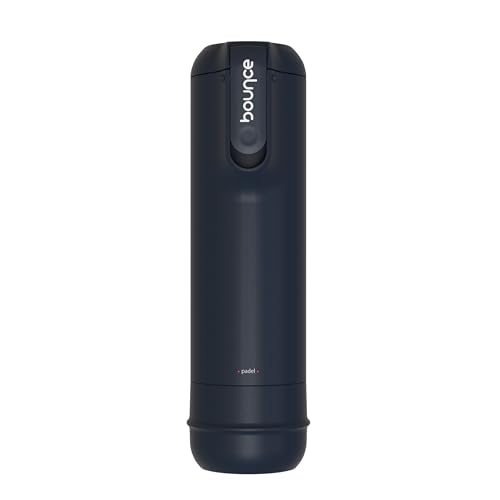
Bounce Tube Padel Ball Pressuriser
The French-designed pressuriser that integrates the pump directly into the lid architecture: slide the outer jacket back and forth to pump the tube to 24 PSI, with no loose accessories or external pump to misplace.

Bullpadel Pascal Box 3B Ball Pressuriser
Bullpadel's precision-oriented pressuriser with a pressure gauge dial that lets you set and verify the exact PSI, preferred by players who want to monitor and fine-tune their ball pressure.
Pressurebox Automatic Padel Ball Pressuriser
An automatic digital pressuriser that maintains a continuous set pressure on up to three balls, designed for players who want to leave balls stored between sessions without manual pumping.
Which balls hold pressure best
Not all padel balls are equally good at retaining pressure between sessions. Felt quality and rubber shell thickness both affect how quickly gas escapes. Tour-quality balls generally have better rubber and thicker felt that slows pressure loss.
The Head Padel Pro Balls (3-Can Pack) is the closest thing to a universal standard for club play: consistently lively across multiple sessions and the reference point most testers use when comparing ball longevity. The Dunlop Pro Padel Balls (3-Can Pack) earn particularly strong marks for pressure retention across three to four sessions and felt durability on rough outdoor surfaces.
The Bullpadel Premium Pro Padel Balls (3-Can Pack) are the budget tier leader: FIP-approved and lively out of the can, but felt durability drops slightly sooner than the Head or Dunlop premium options on abrasive surfaces. They make good economic sense when bought in bulk and combined with consistent pressuriser use.
The Wilson Padel Rush 100 Balls (3-Can Pack) stand out in outdoor humid conditions: Duraweave felt resists moisture absorption better than standard felt, which is the specific performance gain that matters most when you are playing through damp morning sessions or in a coastal climate.

Head Padel Pro Balls (3-Can Pack)
The nearest thing padel has to a universal tour standard: FIP-approved, consistently lively across two to three sessions, and available in multi-can packs that bring per-can cost down meaningfully.
Dunlop Pro Padel Balls (3-Can Pack)
Dunlop's FIP-approved pro ball is a long-established favourite on European circuits for its durability and consistent pressure retention across extended sessions.
Bullpadel Premium Pro Padel Balls (3-Can Pack)
The budget value leader in padel balls: FIP-approved, reactive out of the can, and priced low enough that buying a season's worth in bulk is a genuine strategy.
Wilson Padel Rush 100 Balls (3-Can Pack)
Wilson's Duraweave felt resists moisture and stays controlled on outdoor courts exposed to damp conditions, making it the outdoor session pick for humid climates.
Habits that extend ball life further
Pressurise immediately after the session, not the next morning. The fastest pressure loss happens in the hours immediately after play, when the ball is still warm from impact and the rubber is slightly more permeable.
Store balls at room temperature. Avoid leaving pressurised balls in a hot car or a cold garage overnight if you can help it. The pressuriser slows pressure loss but does not eliminate the effect of temperature extremes on rubber elasticity.
Inspect felt after each session. A ball with visibly thinned or pilling felt on the surface is losing playability regardless of its pressure. Once the felt looks worn, retire the ball regardless of how well it bounces.
Drilling and ball collection gear
If you run multi-ball coaching sessions or solo footwork drills, a ball hopper pays for itself quickly in time saved at collection. The Tourna 50-Ball Hopper with Wheels is the most practical choice: 50-ball capacity on wheels with a telescoping handle, so collecting the end of a drill takes a single lap around the court instead of bending 50 times.
For players who want slightly more capacity without going to a premium hopper, the Head Padel Basket Ball Hopper (60 Balls) holds 60 balls with a pick-up tube at the base that collects balls from the court without bending at all. The trade-off is no wheels: it is a carry hopper rather than a roll hopper, which matters on a full load.
Tourna 50-Ball Hopper with Wheels
A 50-ball hopper with a telescoping handle and wheels that turns ball collection at the end of a padel coaching session from a drag into a quick roll-up.
Head Padel Basket Ball Hopper (60 Balls)
A 60-ball padel basket hopper from Head with a pick-up bottom tube that collects balls from the court without bending down, usable on its own as a floor-level ball collector.
Bounce Tube Padel Ball Pressuriser
The French-designed pressuriser that integrates the pump directly into the lid architecture: slide the outer jacket back and forth to pump the tube to 24 PSI, with no loose accessories or external pump to misplace.
Bullpadel Pascal Box 3B Ball Pressuriser
Bullpadel's precision-oriented pressuriser with a pressure gauge dial that lets you set and verify the exact PSI, preferred by players who want to monitor and fine-tune their ball pressure.
Head Padel Pro Balls (3-Can Pack)
The nearest thing padel has to a universal tour standard: FIP-approved, consistently lively across two to three sessions, and available in multi-can packs that bring per-can cost down meaningfully.
Dunlop Pro Padel Balls (3-Can Pack)
Dunlop's FIP-approved pro ball is a long-established favourite on European circuits for its durability and consistent pressure retention across extended sessions.
Tourna 50-Ball Hopper with Wheels
A 50-ball hopper with a telescoping handle and wheels that turns ball collection at the end of a padel coaching session from a drag into a quick roll-up.
FAQ
Frequently asked questions
Do padel ball pressurisers actually work?+
Yes, within limits. A pressuriser maintains or partially restores internal ball pressure by eliminating the pressure differential that drives gas out of the rubber shell. They work best on balls that are slightly soft rather than completely flat.
What PSI should I store padel balls at?+
Factory padel balls run at approximately 11 PSI. Storing at 11 to 14 PSI in a pressuriser effectively neutralises pressure loss between sessions and can restore slightly flat balls. If you use a gauge-equipped pressuriser like the Bullpadel Pascal Box, target 12 to 14 PSI for everyday storage.
How many times can I use the same can of padel balls with a pressuriser?+
Realistically five to seven sessions with consistent pressuriser use, compared to two to four without one. The exact number depends on ball quality, court surface, and felt condition.
Are pressurised padel balls better than depressurised training balls?+
For club play and development, yes. Pressurised balls bounce and behave like the balls used in competition, so practising with them develops correct technique and timing. Depressurised or low-pressure training balls are slower and change the reaction time needed for shots.