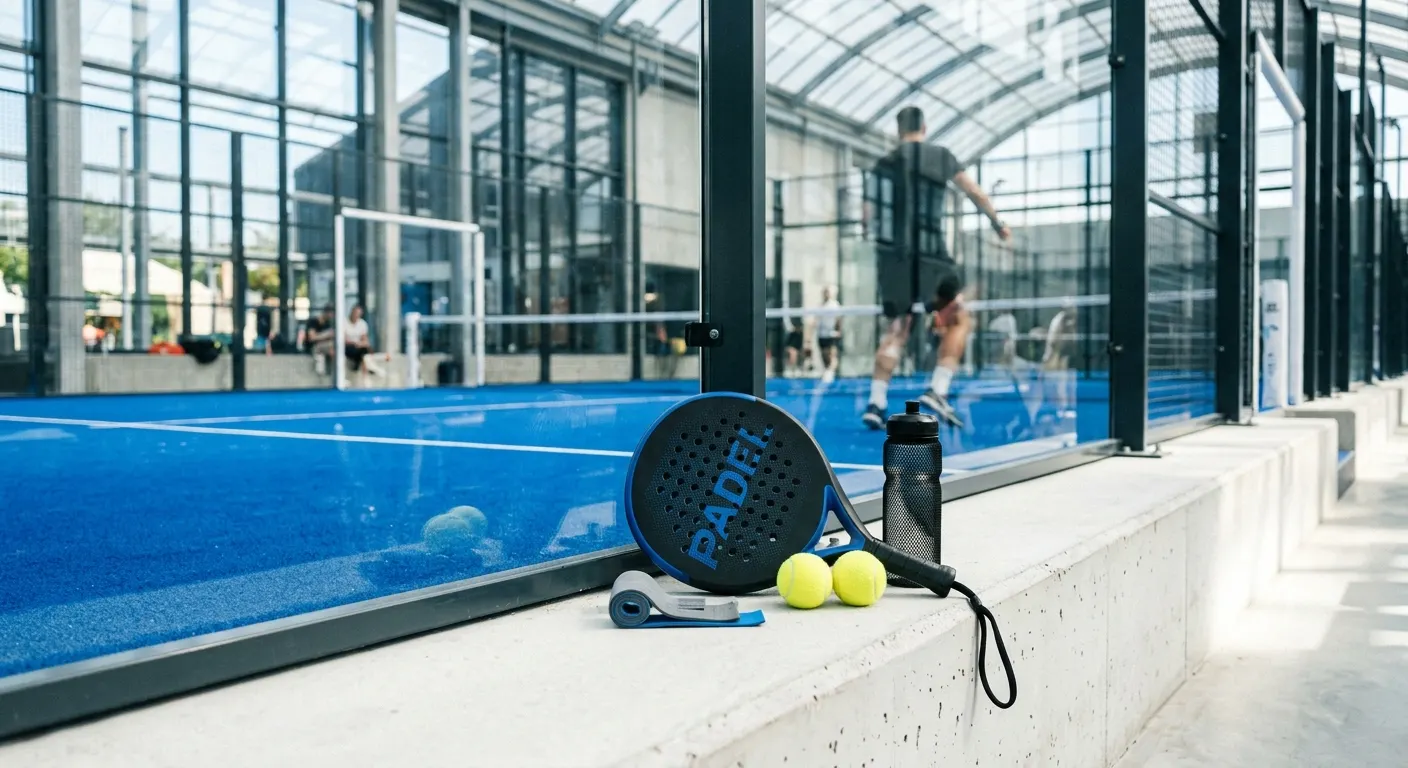
Starting padel does not require a large gear investment, but it does require choosing gear that suits beginner level specifically. Buying too far up the equipment ladder for your current skill is money spent on performance you cannot yet use, and it often produces worse results because advanced gear punishes the inconsistencies that are normal at beginner level. This guide gives you the full first-buy list in order of priority, with specific picks at budget and mid-range levels, and honest guidance on what to skip until your game develops. Start here and you will have everything you need for your first six months on court.
Quick answer
Start with a round beginner racket like the Bullpadel BP10 or Head Flash, a can of FIP-approved balls, a dry-feel overgrip like the Bullpadel GB-1201, and a basic padel bag with a thermal compartment. Add a racket frame protector at the same time as the racket. Skip advanced training accessories until you play at least twice a week consistently.
This guide contains affiliate links. CourtKin may earn a commission at no cost to you.
Priority 1: the right beginner racket
The most important buying decision for a new padel player is choosing a racket matched to beginner level rather than aspiration level. The temptation to buy a teardrop or diamond frame because they look more professional is real and understandable, but those shapes have smaller sweet spots and are more punishing on mishits, both of which make the learning curve steeper for no benefit at beginner level.
Buy a round-shape racket with a soft EVA core. Round shapes give the largest sweet spot area, so contact that is slightly off-centre still produces a usable shot. Soft EVA absorbs impact and protects the arm during the irregular swings that are normal while technique is developing.
The Bullpadel BP10 Beginner Padel Racket is the standout first racket: a properly engineered round frame from a major brand, fibreglass construction for flexibility and forgiveness, soft EVA core for arm comfort, and a price low enough that upgrading in six to twelve months does not feel painful.
The Head Flash Padel Racket is the alternative from Head: same round beginner spec, similar price point, with the Head brand's quality consistency and distribution. Between the two, the Bullpadel offers a slightly softer core feel; the Head offers brand recognition for players who want a familiar name.
Resist the Head Delta Pro 2026 Padel Racket at this stage. It is a solid intermediate upgrade, but it is not a beginner racket.

Bullpadel BP10 Beginner Padel Racket
Bullpadel's entry-level round racket built specifically for new players: maximum sweet-spot area, soft EVA core, and a price that makes starting padel a low-risk commitment.
Head Flash Padel Racket
Head's entry-level club racket aimed at casual starters who want a recognisable brand at under $100 without worrying about technique-matched spec.
Priority 2: FIP-approved balls
Padel balls look like slightly undersized tennis balls but are engineered differently: lower internal pressure, thicker felt for glass-wall contact, and tolerances set by FIP (the International Padel Federation). Always buy FIP-approved balls for club play. Non-approved balls behave differently and will skew how you develop technique.
For beginners, the Bullpadel Premium Pro Padel Balls (3-Can Pack) are the best value choice: FIP-approved, reactive out of the can, and priced low enough that buying two or three cans at once makes sense for frequent play.
The Head Padel Pro Balls (3-Can Pack) is the step up: a closer-to-tour-standard ball that feels livelier across multiple sessions and is the reference point for most club play. If your club already uses Head Pro balls, matching them in training is the right move.
Buy three cans minimum and use a Bounce Tube Padel Ball Pressuriser to extend life between sessions. Starting the pressuriser habit early makes a real difference to your running ball cost.

Bullpadel Premium Pro Padel Balls (3-Can Pack)
The budget value leader in padel balls: FIP-approved, reactive out of the can, and priced low enough that buying a season's worth in bulk is a genuine strategy.
Head Padel Pro Balls (3-Can Pack)
The nearest thing padel has to a universal tour standard: FIP-approved, consistently lively across two to three sessions, and available in multi-can packs that bring per-can cost down meaningfully.
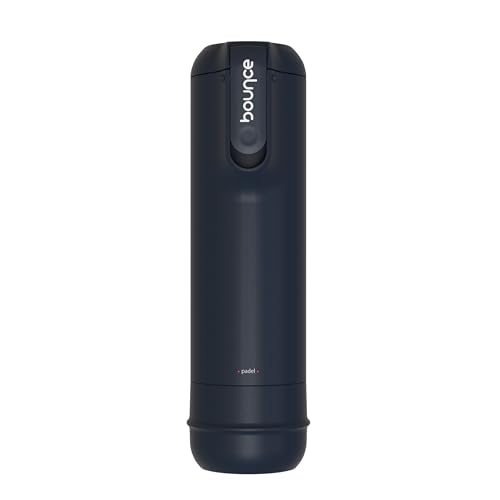
Bounce Tube Padel Ball Pressuriser
The French-designed pressuriser that integrates the pump directly into the lid architecture: slide the outer jacket back and forth to pump the tube to 24 PSI, with no loose accessories or external pump to misplace.
Priority 3: an overgrip from day one
Most beginner rackets ship with a replacement base grip that is adequate but not optimised for performance. Wrapping an overgrip over it on day one is a good habit to start immediately.
The Bullpadel GB-1201 Overgrip (3-Pack) is the recommended first overgrip: its dry-feel micro-perforated surface works in any temperature range and does not go slick when your hands sweat during long sessions. It is the most widely used professional overgrip and suits beginners as well as it suits tour players.
If you know you prefer a slightly sticky grip feel and play in cool indoor conditions, the Head Padel Pro Overgrip (3-Pack) is the tacky-feel alternative. Both are priced under $18 for a three-pack.
Change the overgrip every two to four weeks of regular play, or when the grip feels slick in your hand. A worn overgrip forces you to squeeze the racket harder, which increases forearm load and over time contributes to elbow problems.

Bullpadel GB-1201 Overgrip (3-Pack)
The most-used overgrip on the World Padel Tour: a micro-perforated dry-feel surface that wicks sweat reliably without getting slick, trusted by professionals who play in heat and humidity.

Head Padel Pro Overgrip (3-Pack)
The leading tacky-feel overgrip for padel, offering a slightly sticky surface that grips firmly without squeezing hard, suited to players who prefer the tacky-feel camp.
Priority 4: a bag with thermal protection
A generic sports bag will transport a padel racket, but it will not protect it from the heat of a parked car, which can deform the foam core and change how the racket plays permanently. Even on a beginner budget, a purpose-built padel bag with a thermal compartment is worthwhile.
The Nox PRO Series Padel Backpack is the right starting bag for most beginners: compact enough to commute with, thermal sleeve for the racket, shoe compartment, and a main zone for clothing and accessories. At 28 litres it is big enough for everything a beginner needs without the bulk of a full club bag.
Once you are playing regularly with a backup racket or carrying more kit, the Nox Pro Series Padel Racket Bag is the natural upgrade: a full mid-size club bag with ThermoTech thermal compartment, separate shoe and clothing zones, and capacity for two to three rackets.
Skip the tournament duffels until you are playing competition events and genuinely need to carry four or more rackets.

Nox PRO Series Padel Backpack
A purpose-built 28-litre padel backpack that fits one racket in a thermal sleeve, shoes in a bottom compartment, and daily essentials in the main zone without being too bulky to commute with.

Nox Pro Series Padel Racket Bag
Nox's mid-size club standard bag with a ThermoTech thermal racket compartment, a main clothing zone, and a shoe compartment, sized for two to three rackets and a full day at the club.
Priority 5: a racket frame protector at purchase time
Apply a frame protector to your racket before the first session, not after the first visible chip. This is the most consistently skipped first purchase in padel, and it is also one of the cheapest.
The NOX Transparent Padel Racket Protector is the pick: clear adhesive that sits invisibly on any racket colourway, 3M adhesive that bonds cleanly and stays in place through months of regular play, and a profile that fits most standard racket widths.
For Bullpadel racket owners, the Bullpadel Frame Protector in transparent or black is the brand-matched option that fits Bullpadel frame widths most precisely.
Apply it clean: wipe the frame edge with isopropyl alcohol, let it dry fully, then press the protector from centre to corners. Let it cure a few hours before playing. For a beginner, this is a simple process that takes five minutes and extends racket life by months.

NOX Transparent Padel Racket Protector
A clear adhesive frame guard with 3M tape that sits almost invisibly on any racket colour, protecting the top edge from the grinding concrete and sand contact that wears through carbon frames.
Bullpadel Frame Protector
Bullpadel's branded adhesive edge guard designed to pair with their own racket lines, available in transparent and black to match different frame colourways.
What to skip as a beginner
Training cones, ball hoppers, and ball machines are useful tools but not beginner priorities. The Portable Training Cones Set (50 Pack) for Padel are worth having once you are doing structured footwork and drill-based sessions, but most beginners spend the first several months in coordinated club sessions or casual play rather than solo drill work.
Elbow and wrist braces should not be worn preventatively from day one unless a physio or doctor has specifically recommended them. If you develop forearm soreness after sessions, that is the moment to assess whether a brace is appropriate and, more importantly, whether something about your technique or equipment needs to change.
Advanced rackets are the most tempting unnecessary purchase. The Nox AT10 Pro Cup Soft 2026 is an excellent intermediate racket worth graduating to in six to twelve months, but playing it at beginner level produces worse results than the beginner-appropriate Bullpadel BP10 Beginner Padel Racket because the teardrop shape's smaller sweet spot punishes the inconsistencies normal at that stage.
Bullpadel BP10 Beginner Padel Racket
Bullpadel's entry-level round racket built specifically for new players: maximum sweet-spot area, soft EVA core, and a price that makes starting padel a low-risk commitment.
Bullpadel GB-1201 Overgrip (3-Pack)
The most-used overgrip on the World Padel Tour: a micro-perforated dry-feel surface that wicks sweat reliably without getting slick, trusted by professionals who play in heat and humidity.
Head Padel Pro Balls (3-Can Pack)
The nearest thing padel has to a universal tour standard: FIP-approved, consistently lively across two to three sessions, and available in multi-can packs that bring per-can cost down meaningfully.
Nox PRO Series Padel Backpack
A purpose-built 28-litre padel backpack that fits one racket in a thermal sleeve, shoes in a bottom compartment, and daily essentials in the main zone without being too bulky to commute with.
NOX Transparent Padel Racket Protector
A clear adhesive frame guard with 3M tape that sits almost invisibly on any racket colour, protecting the top edge from the grinding concrete and sand contact that wears through carbon frames.
FAQ
Frequently asked questions
How much should a padel beginner budget for gear?+
A solid beginner kit costs $150 to $250 total: a round beginner racket at $60 to $100, two or three cans of FIP balls at $15 to $25 each, a three-pack of overgrips at $12 to $18, a frame protector at $10 to $18, and a basic thermal bag at $65 to $90. That covers everything you need for the first six months.
Can I use a tennis racket for padel?+
No. Tennis rackets are completely different equipment: they are strung, significantly heavier, have a larger face, and are designed for very different mechanics. Padel rackets are solid foam or EVA cores, perforated solid faces, and a completely different weight and balance range.
Do I need padel-specific shoes to start?+
Yes, and this guide does not cover shoes, but it is worth flagging: padel requires lateral movement on clay-style surfaces and the outsole grip pattern that running shoes or gym trainers lack. Padel-specific or clay court tennis shoes are the correct footwear and genuinely affect your ability to move and stop safely.
When should I upgrade my beginner racket?+
When your groundstrokes land where you aimed them on the majority of attempts and you feel limited by the racket rather than your technique. For most beginners playing twice a week, that is roughly six to twelve months. The correct upgrade from a round beginner frame is a teardrop intermediate racket like the Nox AT10 Pro Cup Soft 2026.
Are padel balls the same as tennis balls?+
No. Padel balls run at lower internal pressure, have thicker felt designed for glass-wall contact, and have diameter tolerances set by the International Padel Federation. Using tennis balls in padel changes the bounce and speed of the game noticeably and does not develop the correct timing and technique for the sport.