Padel balls are a consumable, but the right choice still matters: ball speed affects how the game plays, felt durability decides how many sessions you get per can, and the wrong ball for your conditions goes flat or slick faster than it should. Every ball worth buying carries FIP approval as a baseline. Beyond that, the decision comes down to liveliness, durability, and the surface and climate you play on. The Head Padel Pro Balls (3-Can Pack) is the closest thing padel has to a universal standard, but the best ball for you depends on how and where you play. This guide breaks it down.
Quick answer
The Head Padel Pro Balls (3-Can Pack) is the best all-round padel ball for most club players: FIP-approved, consistently lively across multiple sessions, and the closest thing to a tour standard. For budget bulk buying choose the Bullpadel Premium Pro Padel Balls (3-Can Pack) , for felt durability the Dunlop Pro Padel Balls (3-Can Pack) , and for humid outdoor courts the moisture-resistant Wilson Padel Rush 100 Balls (3-Can Pack) .
This guide contains affiliate links. CourtKin may earn a commission at no cost to you.
FIP approval is the baseline, not the differentiator
FIP is the International Padel Federation, and its approval means a ball has passed standards for size, weight, bounce height, and deformation. Almost all serious competition and most club play requires FIP-approved balls, and every ball in this guide carries that approval. Treat it as the entry requirement rather than a selling point, then compare balls on the factors that actually differ between them: liveliness, felt durability, and how they behave in your conditions.
Padel balls are not tennis balls. They run at lower internal pressure, around 11 PSI versus roughly 14 for a tennis ball, and use thicker felt engineered for repeated glass-wall contact. Using tennis balls in padel noticeably changes the bounce and speed of the game, so stick to padel-specific FIP-approved balls.
The all-round club standard
For most club players at intermediate to advanced level, the Head Padel Pro Balls (3-Can Pack) is the default. It is FIP-approved, stays consistently lively across two to three sessions, and is the reference point most testers use when comparing other balls. It is the safe choice for regular competition and practice, and multi-can packs bring the per-can cost down meaningfully.
The one caveat is that it is slightly faster than mid-speed options, which some beginners find harder to control, and the felt shows wear faster on rough outdoor surfaces. For club play on standard courts, neither is a real drawback. If your club already uses Head Pro balls, matching them in your own training is the right move so your timing transfers directly to match play.

Head Padel Pro Balls (3-Can Pack)
The nearest thing padel has to a universal tour standard: FIP-approved, consistently lively across two to three sessions, and available in multi-can packs that bring per-can cost down meaningfully.
Budget bulk buying and maximum durability
If you play often and buy in bulk, the Bullpadel Premium Pro Padel Balls (3-Can Pack) are the value leader: FIP-approved, lively out of the can, and priced low enough that buying a season worth at once is a genuine strategy. The trade-off is that felt durability drops slightly sooner than premium balls on abrasive outdoor surfaces and bounce consistency fades a little earlier. Combined with consistent pressuriser use, they make strong economic sense for high-volume players.
When durability matters more than rock-bottom price, the Dunlop Pro Padel Balls (3-Can Pack) are the pick. They earn strong marks for pressure retention across three to four sessions and felt durability on rough outdoor courts, which is exactly what you want if you play a lot on abrasive surfaces. They are slightly less lively out of the can than the Head Pro, a fair trade for the longer usable life.
Bullpadel Premium Pro Padel Balls (3-Can Pack)
The budget value leader in padel balls: FIP-approved, reactive out of the can, and priced low enough that buying a season's worth in bulk is a genuine strategy.
Dunlop Pro Padel Balls (3-Can Pack)
Dunlop's FIP-approved pro ball is a long-established favourite on European circuits for its durability and consistent pressure retention across extended sessions.
The right ball for outdoor and humid conditions
Standard felt absorbs moisture, which makes balls feel heavy and dead on damp courts. The Wilson Padel Rush 100 Balls (3-Can Pack) use Duraweave felt that resists moisture absorption better than standard felt, keeping performance consistent through damp morning sessions or in a coastal climate. It is the specific ball to reach for if you regularly play outdoors where humidity or dew is a factor.
For beginners, a mid-speed ball gives more reaction time to set up shots and improve consistency, so the Wilson and Bullpadel options suit newer players well. Advanced players who want full competition pace and bounce tend to prefer the livelier Head Pro. Match ball speed to your level as much as to your conditions.
Wilson Padel Rush 100 Balls (3-Can Pack)
Wilson's Duraweave felt resists moisture and stays controlled on outdoor courts exposed to damp conditions, making it the outdoor session pick for humid climates.
Stretch every can with a pressuriser
Whichever ball you choose, you can roughly double its usable life with a pressuriser. A quality ball typically lasts two to four sessions before going noticeably flat, and storing the balls in a pressuriser at 11 to 14 PSI after each session can stretch that to five to seven sessions by neutralising the pressure differential that drives air out of the ball.
The Bounce Tube Padel Ball Pressuriser is the simplest option, with an integrated pump lid and no loose parts, and pressurising after a session takes about 20 seconds. For players who want to set and verify an exact pressure, the Bullpadel Pascal Box 3B Ball Pressuriser adds a gauge. Either one cuts your long-term ball spend significantly, which matters more than the price difference between ball brands.
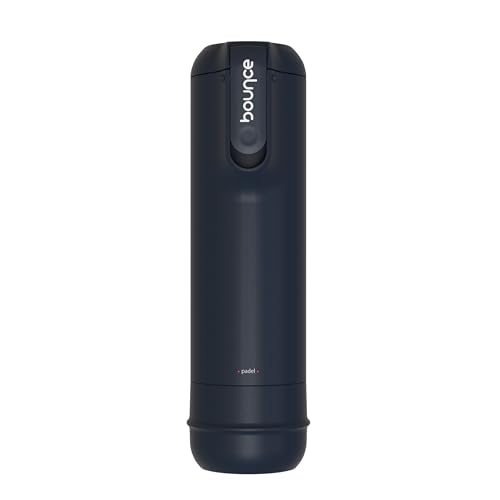
Bounce Tube Padel Ball Pressuriser
The French-designed pressuriser that integrates the pump directly into the lid architecture: slide the outer jacket back and forth to pump the tube to 24 PSI, with no loose accessories or external pump to misplace.

Bullpadel Pascal Box 3B Ball Pressuriser
Bullpadel's precision-oriented pressuriser with a pressure gauge dial that lets you set and verify the exact PSI, preferred by players who want to monitor and fine-tune their ball pressure.
Head Padel Pro Balls (3-Can Pack)
The nearest thing padel has to a universal tour standard: FIP-approved, consistently lively across two to three sessions, and available in multi-can packs that bring per-can cost down meaningfully.
Bullpadel Premium Pro Padel Balls (3-Can Pack)
The budget value leader in padel balls: FIP-approved, reactive out of the can, and priced low enough that buying a season's worth in bulk is a genuine strategy.
Dunlop Pro Padel Balls (3-Can Pack)
Dunlop's FIP-approved pro ball is a long-established favourite on European circuits for its durability and consistent pressure retention across extended sessions.
Wilson Padel Rush 100 Balls (3-Can Pack)
Wilson's Duraweave felt resists moisture and stays controlled on outdoor courts exposed to damp conditions, making it the outdoor session pick for humid climates.
Bounce Tube Padel Ball Pressuriser
The French-designed pressuriser that integrates the pump directly into the lid architecture: slide the outer jacket back and forth to pump the tube to 24 PSI, with no loose accessories or external pump to misplace.
FAQ
Frequently asked questions
What are the best padel balls for club play?+
For most club players the Head Padel Pro is the best all-round choice: FIP-approved, consistently lively across multiple sessions, and the closest thing to a universal tour standard. If your club already uses a particular ball, matching it in training is worthwhile so your timing transfers directly to match play.
How long do padel balls last?+
A quality pressurised padel ball typically lasts two to four sessions of club play before going noticeably flat. Storing them in their pressurised can or a dedicated ball pressuriser after each session can stretch that to five to seven sessions by slowing the pressure loss. Felt wear on rough outdoor courts is a separate factor that can retire a ball even while its pressure is still adequate.
Which padel balls are best for outdoor or humid courts?+
Balls with moisture-resistant felt, such as Wilson Duraweave, hold their performance better on damp or humid outdoor courts than standard felt, which absorbs moisture and feels heavy and dead. If you regularly play outdoors in a humid or coastal climate, a moisture-resistant ball is the right choice.
Should beginners use faster or slower padel balls?+
Slower, mid-speed balls give beginners more time to set up shots and build consistency, so they are the better starting choice. Faster, livelier pro-spec balls suit advanced players who want the game pace and bounce they will encounter in competition. Match ball speed to your level alongside your court conditions.